How IT Services Companies Are Winning More Clients Without Hiring More Sales Reps
IT services firms grow on referrals — until the network tops out. Here's how trigger-based outbound replaces the referral plateau with a pipeline that runs on your terms.

Target keyword: IT services sales growth / MSP sales without hiring | Category: D — Industry-Specific | Links into: The 6-Agent AI Revenue Team Built for SMBs
IT services firms have one of the most consistent pipeline problems in B2B: great technical delivery, inconsistent sales. Most deals come from referrals. The moment referral volume drops, so does revenue. The firm is excellent at the work — and completely dependent on forces outside its control to generate the next client.
The IT services companies breaking that pattern in 2026 are doing it not by hiring more salespeople — but by building a pipeline engine that runs independently of the referral cycle. The mechanism is specific, data-driven, and increasingly accessible to firms at $2M ARR.
The key insight is that IT services buyers have highly predictable buying triggers. Unlike a generic B2B buyer who might need your product at any time, an IT services buyer is most likely to engage when specific, observable events happen at their company. Timing outreach to those events changes the response rate from under 1% to 3–6% — a fundamental shift in pipeline economics.
TL;DR
- IT services and MSP pipeline is predominantly referral-driven, creating a fragile, non-scalable revenue base that plateaus predictably
- The trigger events that predict an IT services buying decision are highly specific and observable — and can be monitored systematically
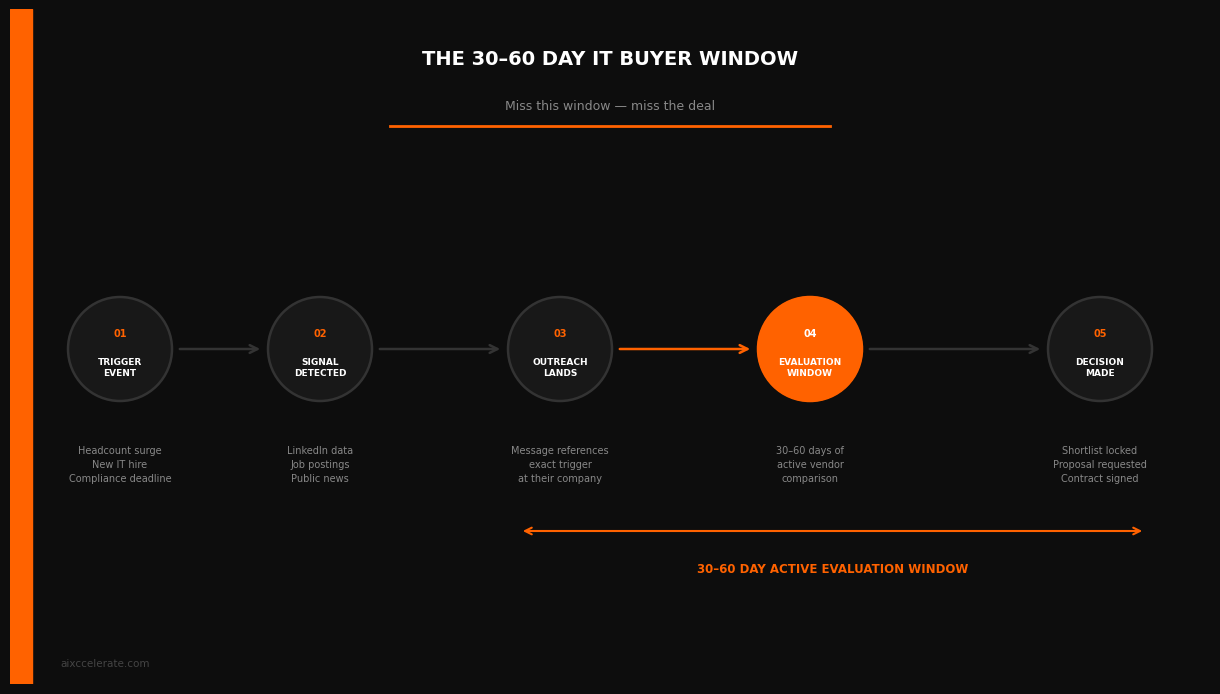
- IT buyers have a 30–60 day active evaluation window — being present in that window determines whether you're in the conversation at all
- AI-assisted outbound tuned to IT-services-specific trigger events consistently produces 3–5% reply rates vs. 0.5–1% for generic outreach
- The "technical credibility first" content model — leading with genuine technical insight, not product positioning — earns IT buyer trust faster
- IT services firms with systematic pipeline generation are growing 2–3x faster than referral-only peers
Why Referrals Aren't Enough for IT Services Growth
Referrals are the most efficient sale you'll ever make: high trust, short sales cycle, low objection count. The problem is supply. You get referrals when existing customers are happy and talking to people who have the same problem. You can't control that rate, and you can't scale it.
IT services firms at $2M–$8M revenue consistently describe the same growth pattern: strong growth in years 1–3 from referrals (founders' networks), plateau in years 3–5 when the referral base tops out, and stagnation unless new pipeline sources are built. The firms that break through this plateau are the ones that build systematic outbound alongside their referral channel — not instead of it.
What Triggers an IT Services Buying Decision?
| Trigger Event | Why It Signals Buying | Observable Signal |
|---|---|---|
| Rapid headcount growth (>20% in 6 months) | Company is outgrowing current IT setup — device management, security, network | LinkedIn headcount data, job postings |
| New CIO / IT Director hired | New leader evaluates all existing vendor relationships within 60–90 days | LinkedIn hire announcement |
| Recent IT incident or downtime (public) | Pain is fresh, tolerance for current provider is low | PR / news, forum mentions, social |
| Compliance deadline approaching (SOC2, HIPAA, ISO) | External pressure with defined timeline — urgency is real | Industry event dates, job postings for compliance roles |
| Cloud migration initiative | IT infrastructure under active review and redesign | Job postings for cloud/DevOps roles |
| M&A activity | IT consolidation required — two environments need merging | Public acquisition/merger announcements |
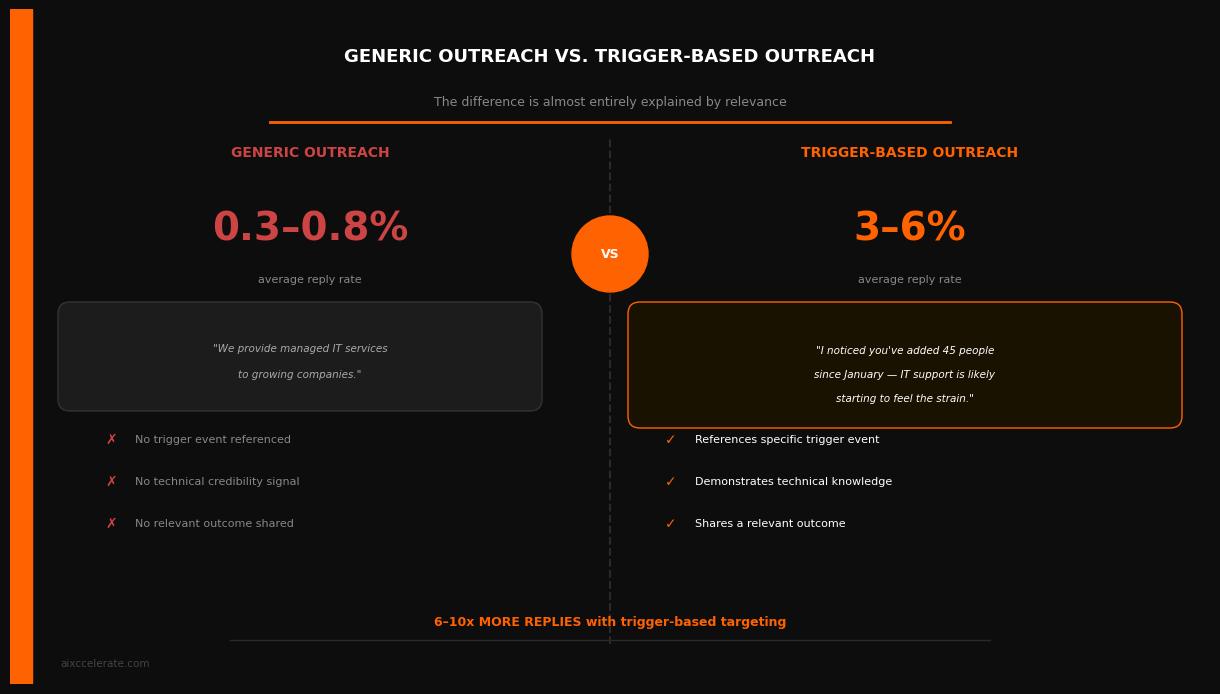
The difference between trigger-based outreach and generic outreach is the difference between a first message that says "I noticed you've added 45 people since January and I imagine IT support is starting to feel the strain" and one that says "We provide managed IT services to growing companies." The first message demonstrates awareness of a specific problem the buyer is experiencing. The second is background noise.
How Do IT Buyers Evaluate Vendors?
Understanding IT buyer psychology is as important as understanding what triggers the buying process. IT buyers are technical, skeptical, and risk-averse. They've seen vendor pitches before and they distrust anything that sounds like marketing language. What they respond to is technical credibility demonstrated through specificity.
The outreach model that works for IT services firms has three characteristics. First, it references a specific trigger event at the buyer's company. Second, it demonstrates technical knowledge by connecting that trigger event to a specific technical risk or challenge. Third, it offers a specific, relevant outcome from a comparable company — a real result, not a generic value proposition.
Generic "we help growing companies with IT support" messaging produces 0.3–0.8% reply rates. Trigger-specific, technically credible messaging produces 3–6% reply rates consistently.
The "Technical Credibility First" Content Model
IT buyers also respond to content that teaches them something genuinely useful. An IT services firm that publishes a well-researched guide to SOC2 implementation for 50–150-person companies, or a framework for evaluating IT infrastructure before a cloud migration, is demonstrating expertise in a way that earns trust before the sales conversation begins.
The content doesn't need to be elaborate. A single well-written piece that addresses a specific technical challenge relevant to the buyer's situation is more valuable than 10 generic "5 reasons to upgrade your IT" posts. The standard is: would an IT director find this useful even if they never buy from us?
Illustrative Example: The MSP That Built a 6-Month Pipeline Without Adding Headcount
A managed IT services firm at $3.8M revenue had 1 part-time business development person and zero systematic outreach. All pipeline came from referrals.
They ran a 90-day experiment: AI-assisted outbound targeting companies in their geographic market that had posted IT-related job openings in the last 30 days — specifically openings that indicated the company was growing its technical team or evaluating its IT infrastructure.
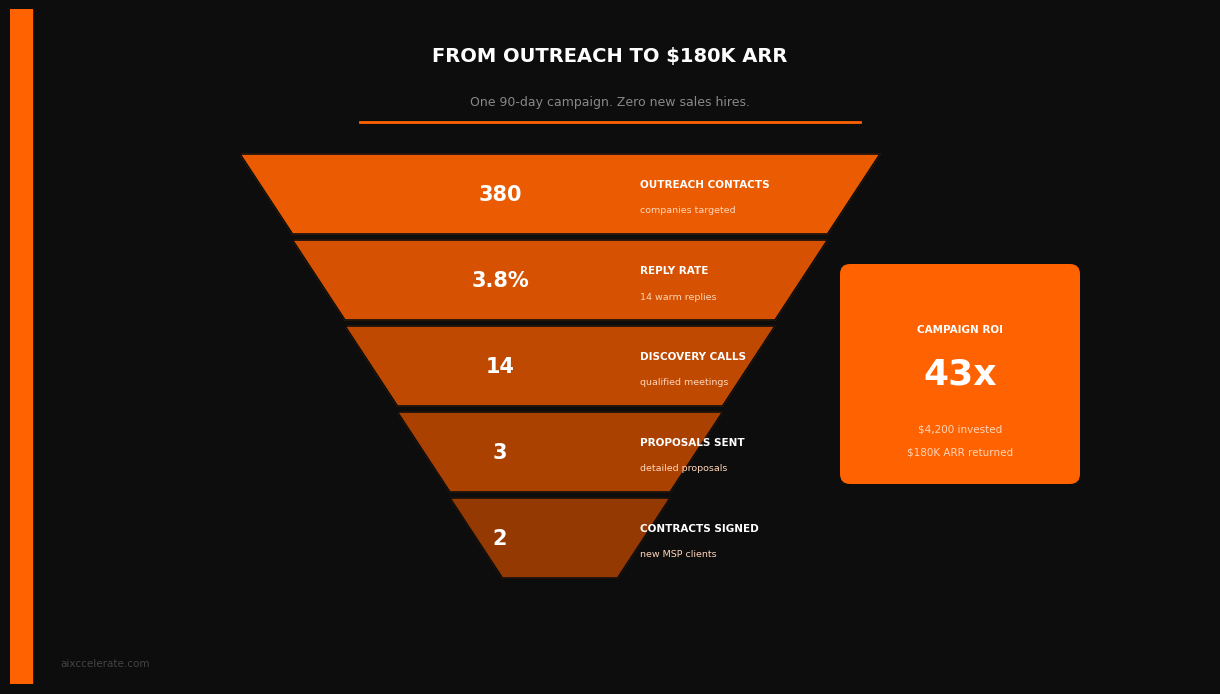
Results: 380 outreach contacts, 3.8% reply rate, 14 discovery calls, 3 proposals, 2 signed contracts worth $180,000 ARR. Program cost: $4,200 in tools and contractor time. ROI on year 1 contract value alone: 43x.
The BD person's time commitment: 30–45 minutes per day reviewing AI-generated replies and attending discovery calls. No new sales hire.
For the AI revenue model behind this approach, read The 6-Agent AI Revenue Team Built for SMBs.
Want to model what systematic outbound could add to your IT services pipeline? Use the free AI Revenue Team ROI Calculator.
How AI-Assisted Outbound Changes the Trigger-Based Model
Monitoring 50–200 target companies for specific trigger events, enriching contact data, personalising outreach at scale, and executing 8–10 touch sequences across email and LinkedIn — this is the work that makes trigger-based outbound effective, and it's the work that's most expensive to do manually.
AI Xccelerate's outbound AI agent Jules handles this function specifically: monitoring target accounts for buying signals, building personalised outreach sequences that lead with the relevant trigger event, executing follow-up reliably across all touchpoints, and routing warm replies to the human BD person or AE. The IT services firm owner or BD person reviews and handles warm replies — the high-judgment work — without spending their day on prospecting and data entry.
FAQ
Why is referral-based pipeline a problem for IT services companies?
Because referrals can't be planned, predicted, or scaled. A referral-dependent pipeline means revenue is determined by the unpredictable social behaviour of your existing clients, not by deliberate action. It works until the network is tapped, then it plateaus — and the plateau can last years.
What is the best trigger event for IT services outbound?
Rapid headcount growth combined with IT role vacancies or infrastructure job postings. This pattern reliably signals a company that has outgrown its current IT setup and is actively evaluating its options. The timing window is 30–60 days from when the signal appears.
How do I differentiate my IT services firm in cold outreach?
Specificity and technical credibility. Reference the exact trigger event at their company, share a relevant data point or outcome from a similar company, and demonstrate technical knowledge of the challenge they're likely facing. Avoid generic positioning language that every IT firm uses.
How long does it take to build systematic pipeline for an IT services firm?
The first qualified leads from a trigger-based outbound campaign typically appear within 30–45 days. A consistent, scalable pipeline — predictable monthly meeting volume — takes 3–4 months to establish as targeting and messaging gets refined.
What is a realistic conversion rate for IT services outbound?
At sharp ICP with trigger-based targeting: 3–6% reply rate, 1.5–3% meeting booking rate. For generic outreach without trigger-event specificity: 0.3–0.8%. The difference is almost entirely explained by relevance — whether the message arrived at a moment when the prospect was actually experiencing the problem you address.
Do IT buyers respond to LinkedIn outreach?
Yes — LinkedIn is more effective than email for IT buyers in director-and-above roles. A warm LinkedIn connection request with a relevant note, followed by email, outperforms cold email alone by 40–60%. The combination signals a real person rather than a blasted sequence.
Ready to build systematic pipeline for your IT services firm? Book a 20-minute AI Workforce Audit